
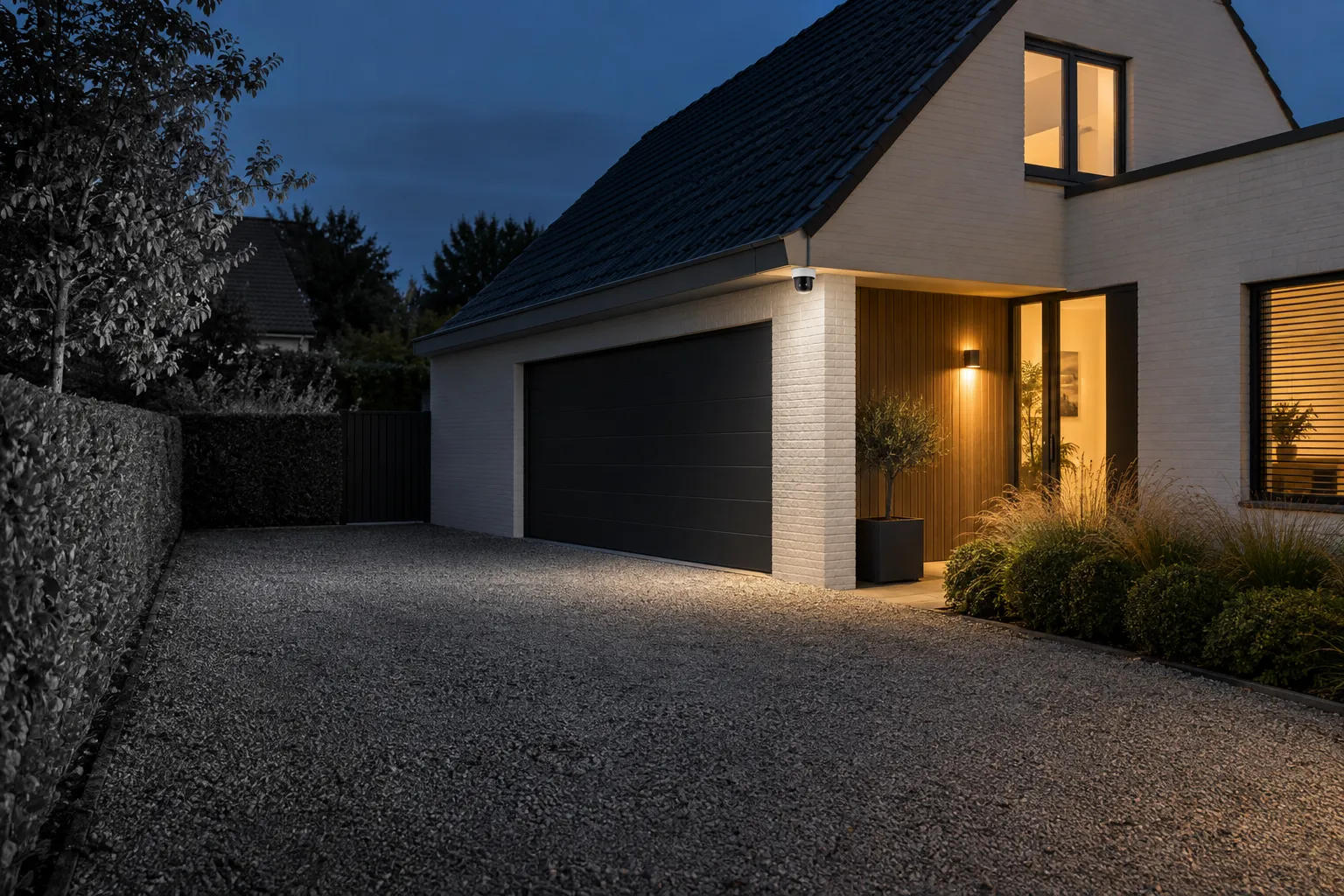
Infrared provides a readable image without visible lighting, usually in monochrome. Colour preserves clues such as clothing and vehicles but needs enough light and exposure short enough for movement. Carefully targeted lighting and scene-specific calibration often make the greatest difference.
Key points
- Test in full darkness.
- Avoid nearby reflective surfaces.
- Control motion blur.
- Use targeted illumination.
Define the night-image purpose
A bright view can still be useless when a walking person is blurred.
Define detail, distance, subject speed and available light.
- Detection
- Distance
- Speed
- Light
- Reflections
Infrared
IR illuminates without visible white light and normally switches to monochrome.
Rain, insects, walls and glass can reflect strongly into the lens.
- Discreet
- Monochrome
- Reflections
- Not behind glass
Low-light colour
Colour helps describe clothing and vehicles but still needs light.
Exposure that is too long creates motion blur.
| Mode | Benefit | Limit | Use |
|---|---|---|---|
| IR | Dark scenes | No colour | Garden |
| Low-light colour | Colour clues | Needs residual light | Entrance |
| Event white light | Colour and deterrence | May disturb | Private zone |
| Permanent lighting | Stable | Energy and nuisance | Car park |
Backlight and plates
Headlights and bright streets require suitable dynamic range and exposure.
A dedicated plate view is often better than one general compromise.
- Dynamic range
- Short exposure
- Low plate angle
- Context view
Placement and maintenance
Keep walls, gutters and vegetation out of the near IR beam.
Clean the lens and retest after lighting or garden changes.
- Clear foreground
- Avoid glare
- Clean lens
- Trim vegetation
Privacy and neighbours
Limit both illumination and field of view to the protected area.
Belgian camera rules still apply to infrared and night footage.
- Limited view
- Targeted light
- Information
- Access rights
Night acceptance test
Test moving people and vehicles after full darkness.
Review live, recorded and exported footage and keep reference images.
- Full night
- Movement
- Recording
- Export
- Reference
FAQ
Can infrared see in total darkness?
Yes within its useful range, normally in monochrome.
Is colour always better?
No. A sharp monochrome image can be more useful than blurred colour.
What causes a white haze?
Dirt, droplets or nearby surfaces can reflect IR into the lens.
Can one camera read plates and cover a whole car park?
Dedicated plate and context views are often more reliable.