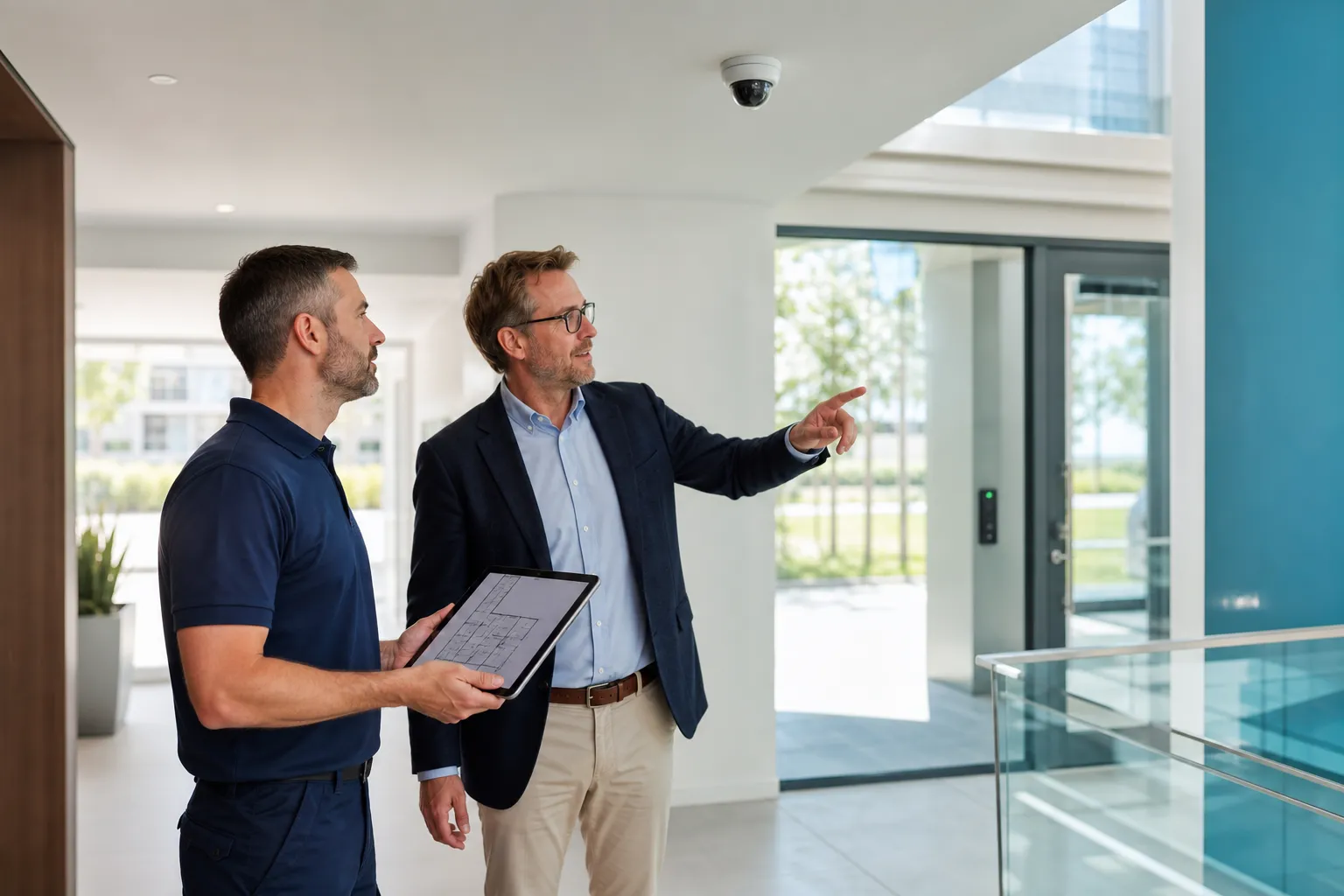
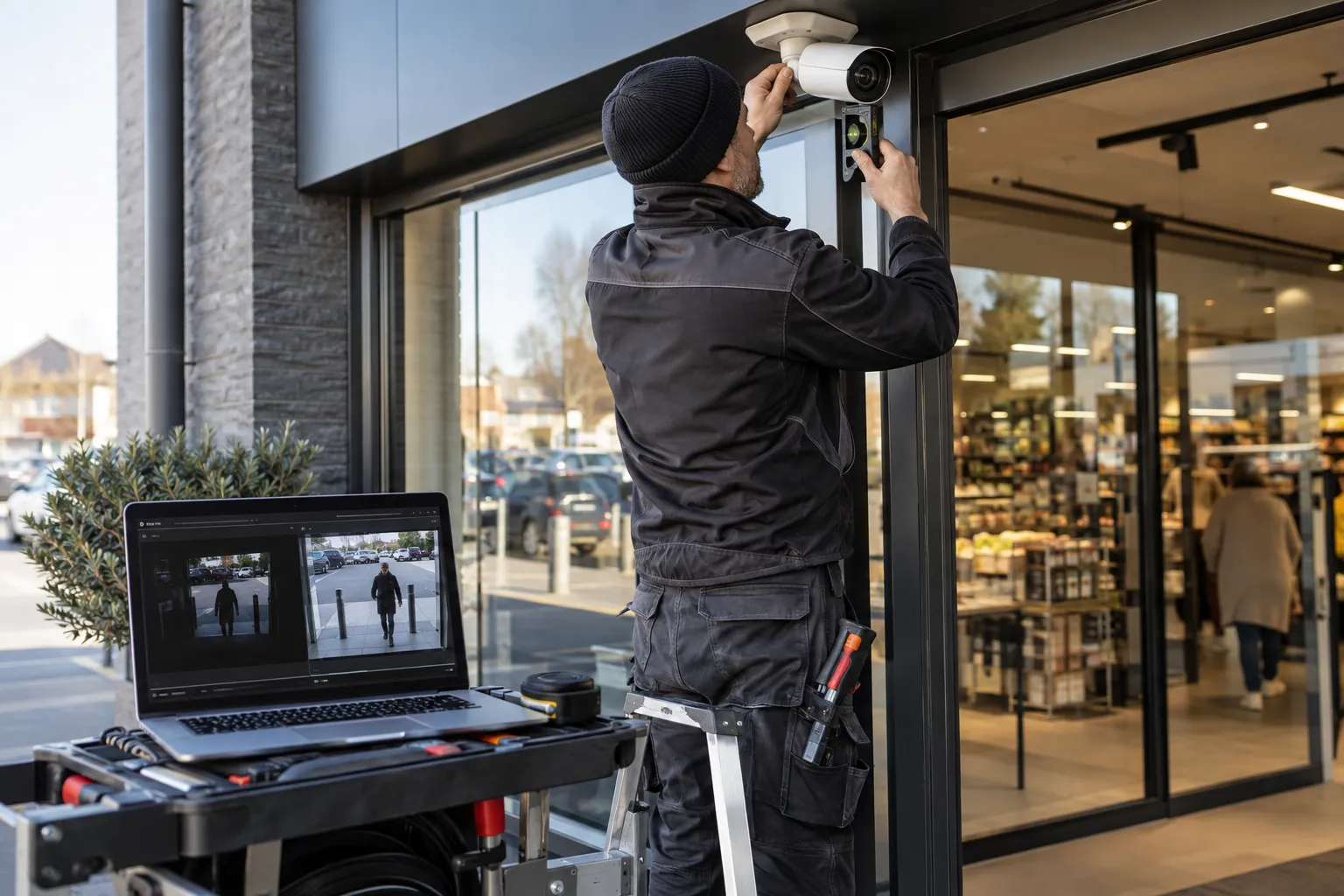
A usable image shows the intended detail at the critical moment, in the recording and after export. Megapixels alone are insufficient: field of view, pixel density, height, lighting, shutter speed, compression and maintenance work together. Test realistic scenarios by day and night.
Key points
- Give every camera a defined task.
- Frame tighter where identification matters.
- Test moving people and vehicles.
- Check recording and export, not only live view.
Four image tasks
An overview may detect presence without enabling identification.
Label each position for detection, observation, recognition or identification.
- Detection
- Observation
- Recognition
- Identification
- Specific detail
Field of view and detail
A wider view gives each subject fewer pixels.
Combine context and a targeted view when both are required.
- Measure width
- Measure distance
- Remove irrelevant areas
- Test on real display
Light and motion
Backlight darkens faces and long exposure blurs movement.
Test walking, fast passage and vehicle headlights.
| Issue | Symptom | Possible fix | Test |
|---|---|---|---|
| Too wide | Tiny subject | Targeted lens | Detail |
| Backlight | Dark face | Angle, WDR, light | Entrance |
| Long exposure | Blur | Light or shutter | Motion |
| Compression | Blocks | Bitrate | Export |
Height and angle
A camera that is too high records the top of heads; a controlled passage can provide a better facial angle.
Plate capture requires limited angles and often a dedicated camera.
- Suitable height
- Predictable path
- Limited angle
- Stable support
Recording and export
Ensure the main stream is recorded and all clocks are synchronised.
Export a test clip and play it on another computer.
- Main stream
- Time
- Format
- Player
- Traceability
Maintain quality
Vegetation, lighting, layout and dirt alter the view over time.
Compare with reference images and check storage, focus and offline alerts.
- Cleaning
- Vegetation
- Focus
- Disk
- Offline alert
Realistic acceptance
Test the real task for each camera under difficult conditions.
Record expected image, result, settings and corrections.
- Scenario
- Day/night
- Motion
- Playback
- Export
FAQ
Do more megapixels always provide better evidence?
No. Lighting, angle, motion and compression remain decisive.
Why can live view look better than recording?
The recorder may use a lower-quality or more compressed stream.
What mounting height should be used?
It depends on risk and the image task.
How should a system be accepted?
Test real scenarios and verify live view, recording and independent export.