
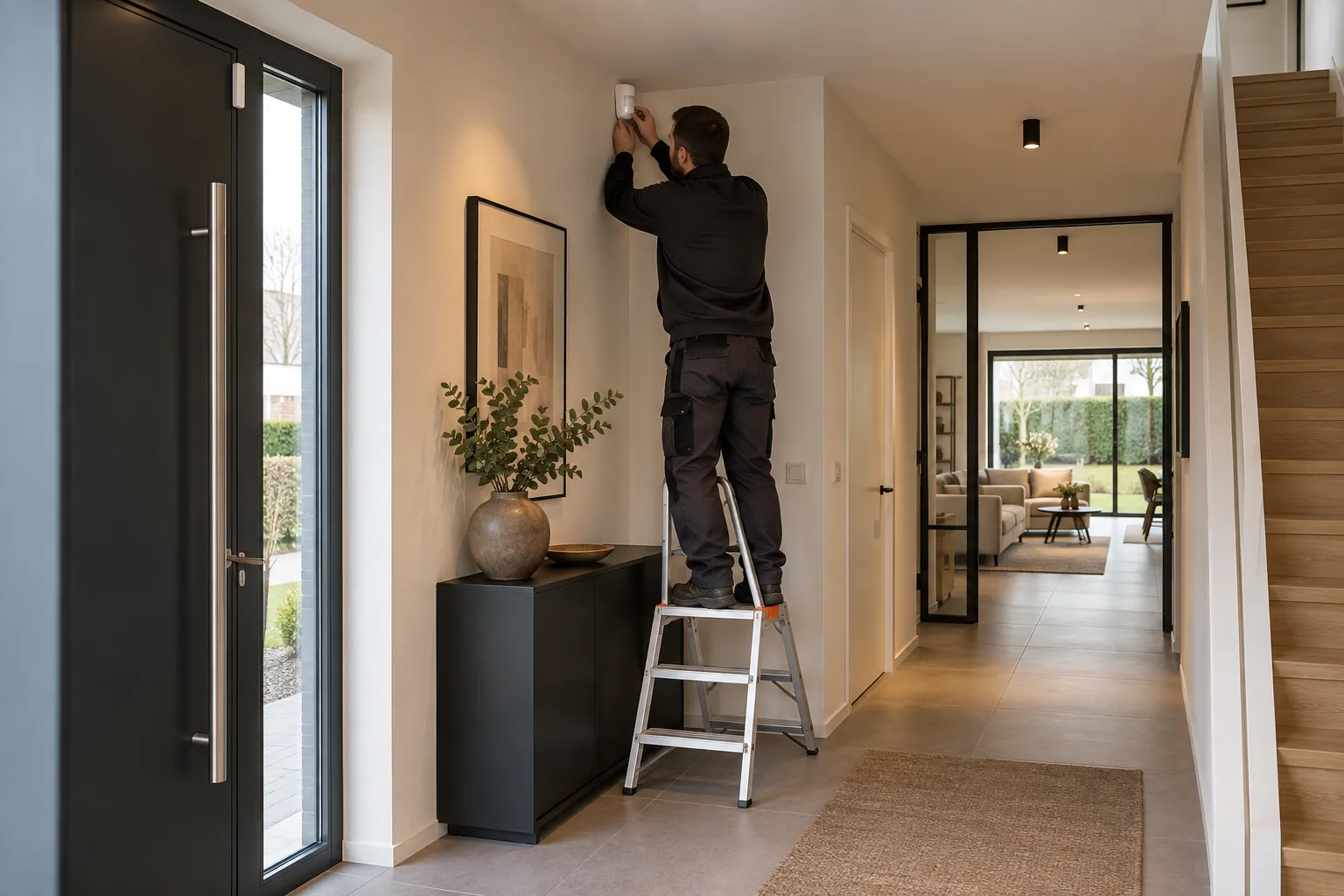
Protect vulnerable openings first and place motion detection on unavoidable routes. Add glass-break, outdoor or dedicated-room detection according to risk. Avoid direct sun, heating, moving curtains and blocked views, and design day, night and away modes for residents and pets.
Key points
- Protect openings first.
- Use halls and landings.
- Create simple modes.
- Test with residents.
Start with the intrusion path
Assess doors, low windows, garage, cellar and outbuildings.
Electronic detection complements physical security and routines.
- Rear door
- Patio door
- Garage
- Low window
- Cellar
Opening contacts
A contact reports opening and supports perimeter protection while residents remain inside.
Match the sensor and mounting to each frame or door.
- Main door
- Garden access
- Garage
- Windows
- Hatches
Motion on routes
Entrance halls, corridors and landings concentrate movement. Avoid obstruction by furniture or doors.
Do not aim a standard detector at sun, heaters or moving curtains.
| Area | Sensor | Benefit | Watch for |
|---|---|---|---|
| Door | Contact | Early | Frame |
| Hall | Motion | Required route | Heat |
| Glazing | Contact/glass | Night mode | Curtains |
| Garage | Suitable motion | Volume | Dust |
Pets and environment
Pet tolerance depends on size, furniture and behaviour.
Choose sensors suited to temperature, moisture and dust.
- Pet size
- Climbing
- Temperature
- Moisture
Night mode
Protect perimeter and unused areas while leaving a safe route for residents.
Make status and controls clear and test the routine.
- Perimeter
- Route
- Control
- Status
- Household
Sensitive areas
Protect valuable rooms, the alarm panel and communications from tampering.
Outdoor detection needs stable zones and careful calibration.
- Room
- Panel
- Siren
- Communication
- Outdoor
Testing and change
Walk routes, open contacts and verify messages and delays.
Review after renovation, furniture changes or a new pet.
- Walk test
- Opening
- Night
- Communication
- Review
FAQ
Does every room need a detector?
Not always; openings and unavoidable routes are often more effective.
Can the alarm remain active at night?
Yes with a suitable night mode.
Will pet tolerance prevent every alert?
No. Placement, furniture and behaviour still matter.
Where should motion sensors be avoided?
Avoid sun, heat, moving curtains, draughts and blocked views.