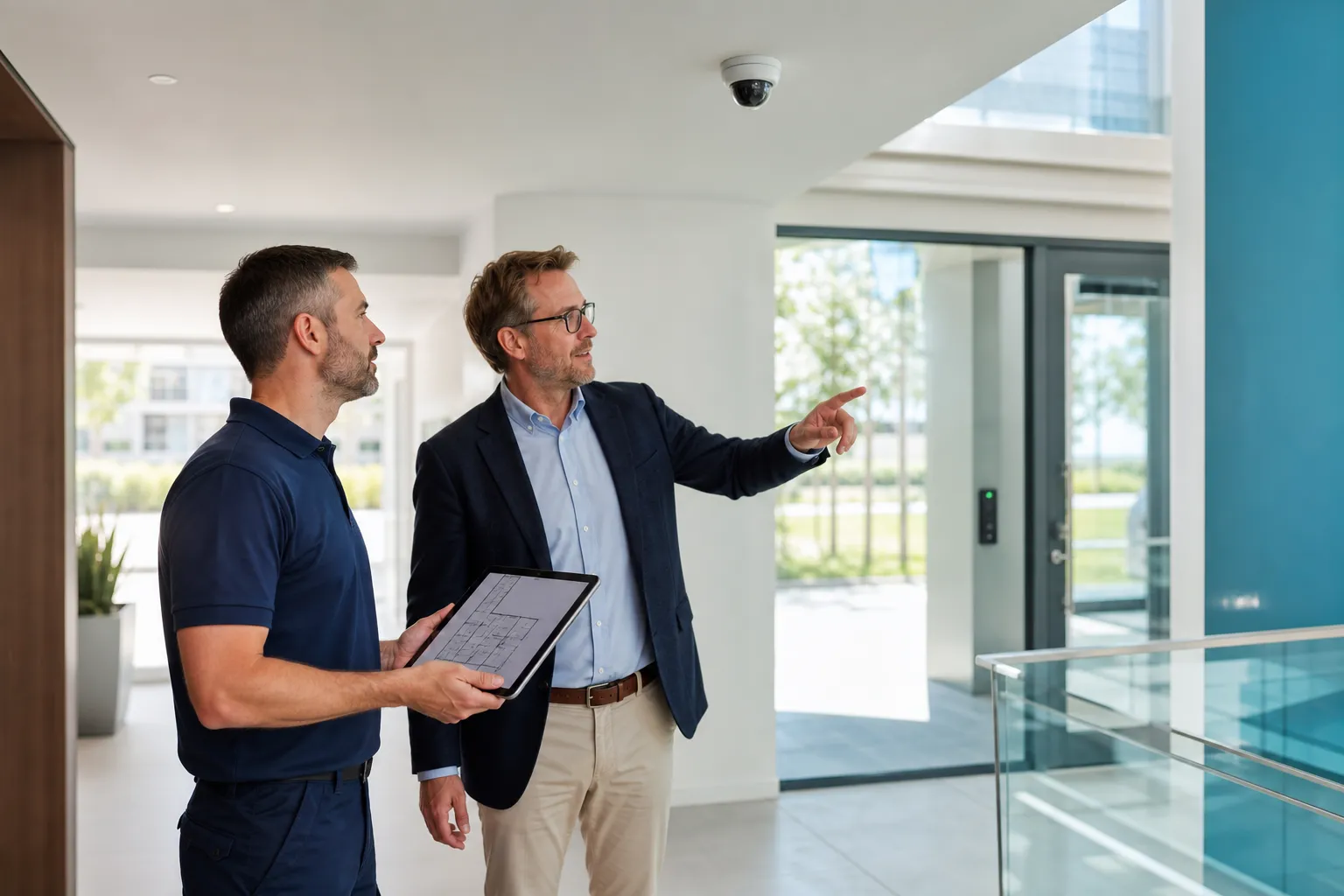
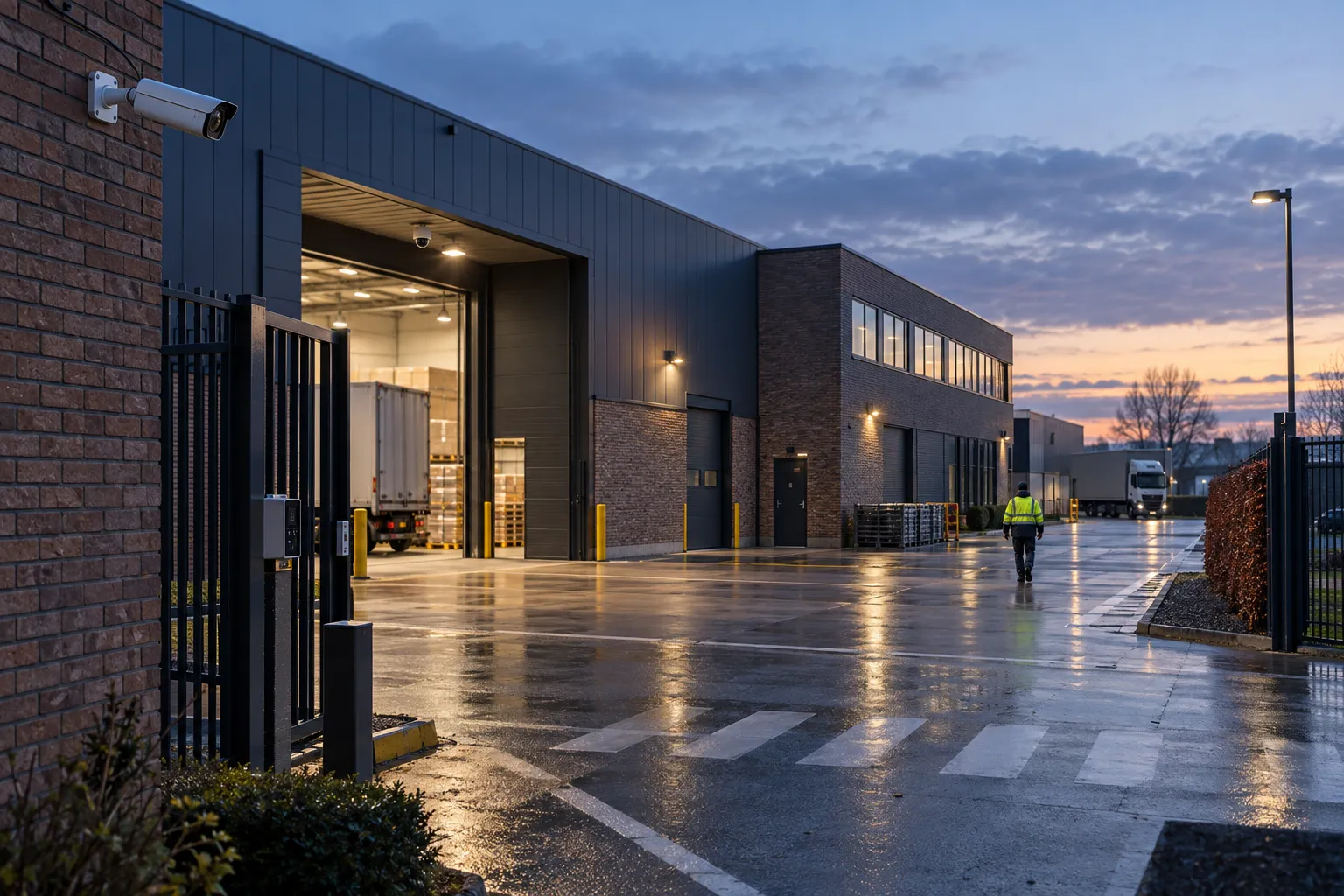
Protect in layers: boundary, yard, shell, access, internal zones and critical infrastructure. Each layer receives suitable detection, verification and response, distinguishing normal activity from incidents despite distance, night and weather.
Key points
- Map people, vehicles, goods and schedules.
- Separate perimeter, building and sensitive stock.
- Design network and power for site distances.
- Test at night and during real operations.
- Involve prevention, IT and operations.
Map flows before equipment
Map trucks, cars, pedestrians, staff, drivers and visitors with schedules and rarely used doors.
Mark valuable stock, technical areas and operations. Security should follow work without blocking it.
- Vehicle entrances
- Pedestrians
- Bays
- Stock
- Technical rooms
- Evacuation
Layer 1: Perimeter and yard
Outdoor detection sees rain, vegetation, animals and headlights. Test technology and maintain terrain and lighting.
Combine overview views with targeted passage views based on distance.
- Fences
- Vegetation
- Lighting
- Authorised routes
- Distance
Layer 2: Building shell
Doors, bays, windows and roof access have different uses. Contacts and closing procedures show whether the shell is secure.
Zoning follows operations so one open bay does not disable everything.
| Element | Question |
|---|---|
| Staff door | Who and when? |
| Loading bay | When may it stay open? |
| Emergency exit | How to monitor without hindering escape? |
| Roof | Is access plausible? |
| Technical room | Who is authorised? |
Layer 3: Access and internal zones
Credentials separate staff, agency workers and contractors. Temporary rights get an end date.
Sensitive internal zones receive stricter permissions and targeted verification.
- Roles
- Temporary access
- Revocation
- Sensitive zones
- Central management
Cameras with a purpose
Bays, passages and intersections often add more value than long aisles without purpose. Define observe, recognise or identify.
Workplace video must remain proportionate and follow CBA No. 68. Do not turn security into constant performance monitoring.
- Purpose per view
- Passages
- Night and headlights
- User accounts
- Workplace rules
Fire and security
Fire risk assessment follows activity, storage, building and people. Intrusion and access do not replace fire functions.
Useful interfaces are validated and tested with life safety first.
- Assessment
- Detection
- Evacuation
- Interfaces
- Testing
Network, power and storage
Distance may require fibre, distributed network points and protected power. Secure outdoor cables and accessible equipment.
Monitor recording, disks, network and power. A visible camera that is not recording creates false confidence.
| Infrastructure | Check |
|---|---|
| Network | Capacity and segmentation |
| Power | Backup and protection |
| Storage | Retention and disks |
| Time | Synchronisation |
| Admin | Named accounts |
Realistic tests
Test truck flow, a wet night, an open bay, temporary credential and simulated network loss.
Create short procedures for opening, alarm, lost credential, camera failure and maintenance. Review after change.
- Night
- Operations
- Failure mode
- Contact chain
- Maintenance
- Change review
FAQ
Should every aisle be filmed?
Not necessarily; passages, bays and intersections often provide more context.
How are outdoor nuisance alarms reduced?
Suitable technology, grounds maintenance, lighting and real tests.
Can drivers receive credentials?
Yes with limited rights and an expiry date.
Who should be involved?
Operations, prevention, IT, maintenance and security owners.