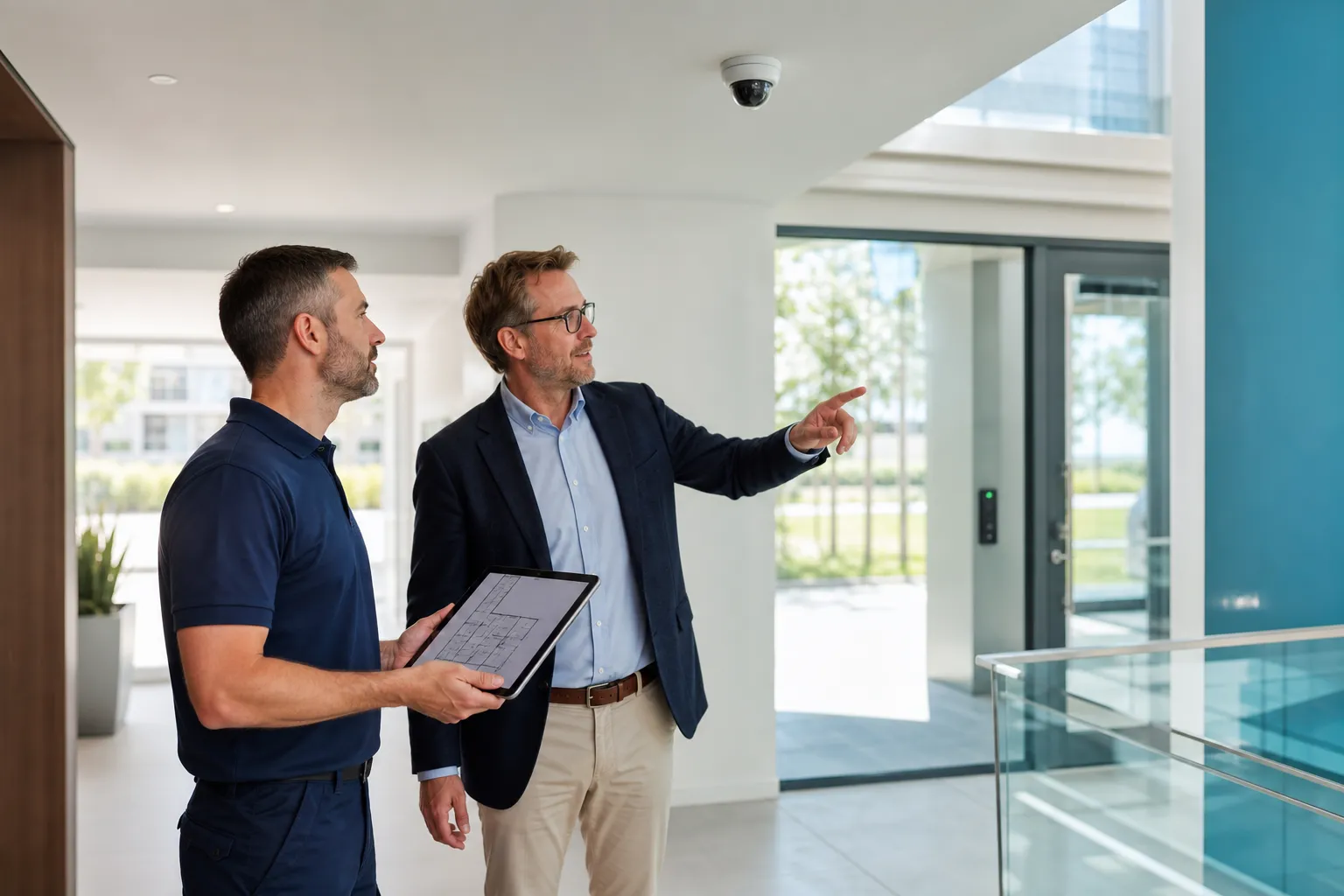
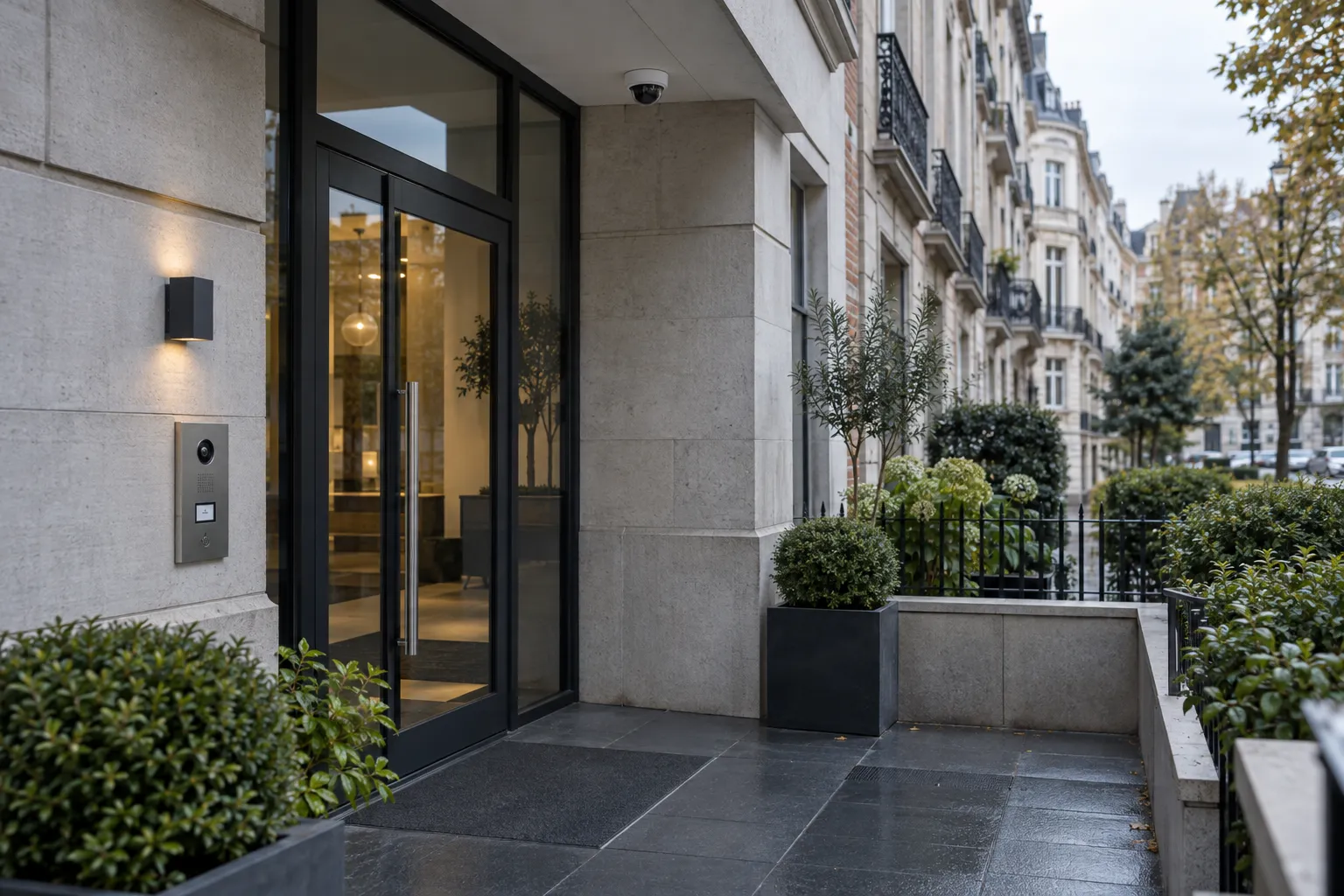
Using security cameras in Belgium generally requires a legitimate purpose, proportionate framing, notice to people, the required notification, an internal record, controlled access and limited retention. Rules vary by location and use. CCTV at work also brings Collective Agreement No. 68 into scope.
Key points
- Establish whether the device is a surveillance camera under the law.
- Record only what is necessary.
- Place compliant signage before entry to the filmed zone.
- Notify no later than the day before commissioning when required.
- Document processing and limit access.
Regulatory content reviewed on 8 September 2026. Check official sources for your specific situation.
Which devices fall under camera law?
The legal purpose matters more than the product label. A fixed, temporary fixed or mobile system processing images to prevent or detect offences, nuisance or maintain order may be covered.
A video doorbell, process camera or workplace camera can follow a different analysis depending on purpose, location and recording. Examine operation and people appearing in view.
- Why is it used?
- What type of place?
- Is footage recorded?
- Could workers, neighbours or passers-by appear?
Purpose, necessity and proportionality
The controller should explain the concrete problem. A risk does not make every camera necessary.
Limit the field of view. Public space and neighbouring property should appear only to the strict minimum where unavoidable. Masking can help but does not replace proper positioning.
- Written purpose per view
- Justify each position
- Avoid irrelevant spaces
- Review after building changes
Notification and annual review
The Belgian Data Protection Authority states that notification to police services must occur no later than the day before commissioning when the duty applies. Changes must also be notified per location through the Interior service application.
The party deciding purposes and means remains responsible. An installer can supply technical details but does not automatically take over the duty. Plan an annual review.
- One notification per place
- Before commissioning
- Update changes
- Annual controller check
The sign is not just a sticker
People must know before entering the filmed zone. A uniform model with required size and information applies by place type. Hidden surveillance cameras are prohibited.
The sign may not provide every GDPR transparency detail. Make further information on controller, purpose, rights and retention accessible.
- At the zone entrance
- Correct model
- Current details
- Accessible extra notice
Record, security and access
Notification does not replace the internal processing record. Describe purpose, location, people, cameras, recipients, retention and security.
Limit footage to justified roles. Named accounts, strong authentication, separate permissions and controlled exports are preferable to shared logins.
- Current record
- Named accounts
- Least privilege
- Controlled exports
- Updates and maintenance
How long may footage be kept?
The DPA states a general one-month maximum, with limited exceptions for evidence and certain risk locations. A legal maximum is not an automatic default.
Choose the shortest useful period and document automatic deletion. Incident exports should be managed separately.
| Question | Approach |
|---|---|
| Why retain? | Tie it to the purpose |
| How many days? | Shortest useful period within law |
| Incident? | Isolate and document the clip |
| Who exports? | Restrict rights |
Cameras in the workplace
Where workers may be filmed, Collective Agreement No. 68 also applies. Purposes are limited and information or consultation can be required.
Do not normalise permanent monitoring of workstations. Involve management, prevention and competent representatives, then reflect decisions in technical permissions.
- Purpose compatible with CBA No. 68
- Appropriate information and consultation
- No broad monitoring for convenience
- Known access rules
Pre-commissioning checklist
Assemble the camera plan, purpose, notification, sign, record, retention, users and rights process. Test actual views by day and night.
This general guide was reviewed on 30 August 2026. Check the DPA, BeSafe and applicable texts for the specific location.
- Purposes
- Proportionate angles
- Notification and record
- Signage
- Accounts and retention
- Annual review
FAQ
May a home camera film the street?
Public space should be limited to the strict minimum where it is unavoidable in the field of view.
Who submits the notification?
The controller carries the responsibility; the installer can provide technical information.
Is signage enough for GDPR?
Not always. Additional accessible information may be required.
Are hidden cameras allowed?
Belgian camera law prohibits hidden use of surveillance cameras.