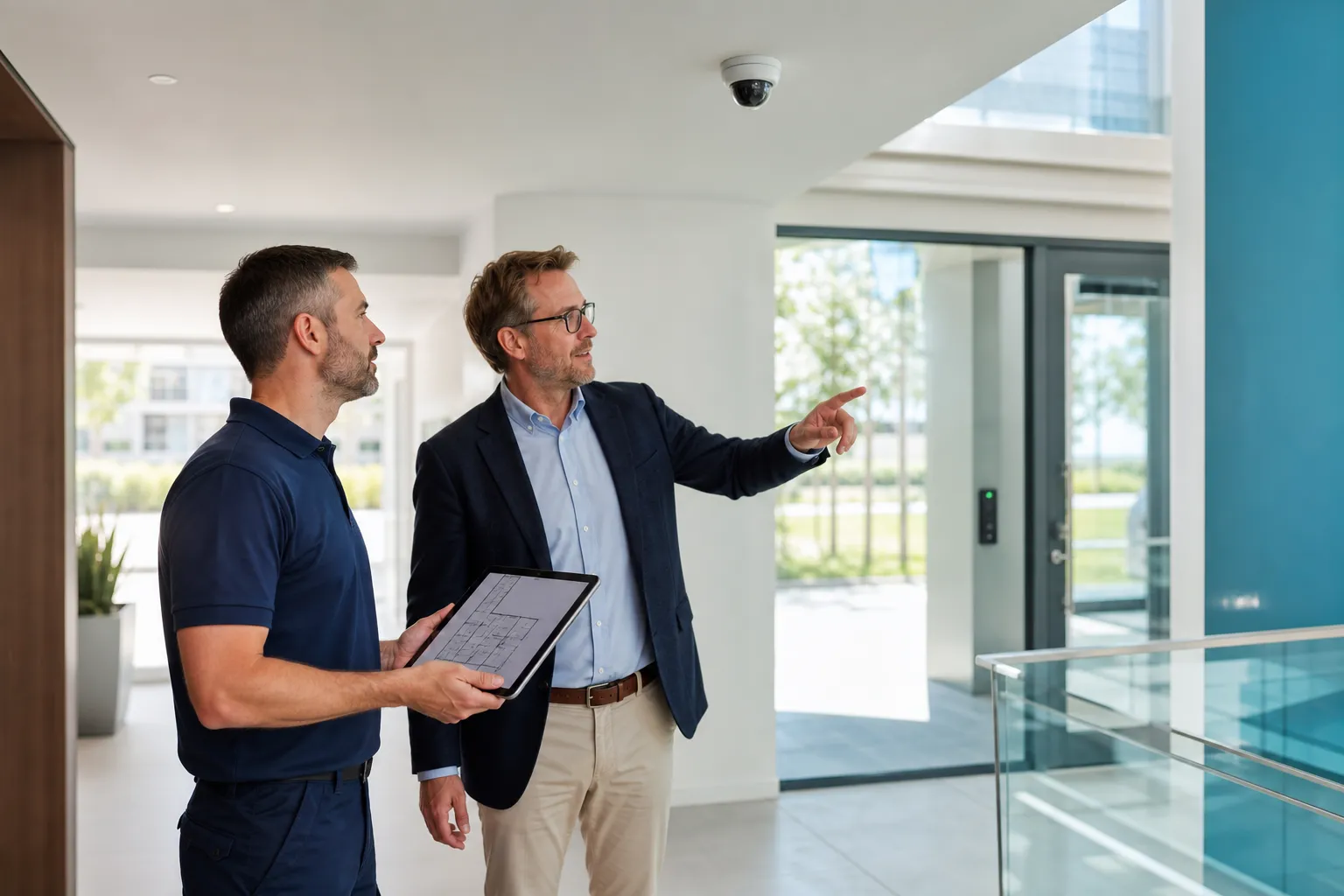

A second home should resist entry, look maintained and report intrusion, smoke or water quickly. Combine locks, timed lighting, an alarm with resilient communication, targeted cameras and a reliable local contact.
Key points
- Reduce visible signs of vacancy.
- Plan a local contact and procedure.
- Monitor water and temperature too.
- Secure accounts and backup links.
Signs of absence
Arrange mail, garden, bins and varied lighting.
Do not publish travel dates publicly and track keys.
- Garden
- Lighting
- Bins
- Online discretion
Strengthen access
Check doors, cylinders, windows, garage, cellar and outbuildings.
Physical security delays while alarms detect; use both.
- Doors
- Windows
- Garage
- Outbuilding
- Keys
Alarm for vacancy
Use contacts, motion and communication that does not rely only on home internet.
Define recipients, keyholders and safe verification.
| Risk | Detection | Response | Prepare |
|---|---|---|---|
| Intrusion | Contact/motion | Verification | Test zones |
| Smoke | Detector | Contact/help | Service |
| Water | Leak sensor | Visit/shut off | Valve |
| Temperature | Sensor | Local contact | Threshold |
| Failure | Technical | Check | Battery |
Targeted cameras
Use entrance and garage views for verification and limit the field of view.
Test night and failures; images do not replace a physical check.
- Entrance
- Rear
- Garage
- Limited view
- Night
Technical risks
Vacancy increases the impact of water, heating, electricity and fire failures.
Link every alert to someone able to act.
- Water
- Temperature
- Power
- Smoke
- Access
Remote access
Use unique passwords, MFA, updates and individual accounts.
Test mobile access and remove old devices.
- Password
- MFA
- Updates
- Accounts
- Devices
Departure check
Test alarm, communication, cameras and technical sensors.
On return, review logs and improve unnecessary alerts.
- Test
- Battery
- Contacts
- Visits
- Log
FAQ
Should every shutter stay closed?
Not necessarily; a normal maintained appearance is preferable.
Is a camera enough?
No. Combine physical security, alarm and local response.
Who receives alerts?
Available people with a safe procedure.
What should be tested?
Alarm zones, communication, batteries and technical sensors.