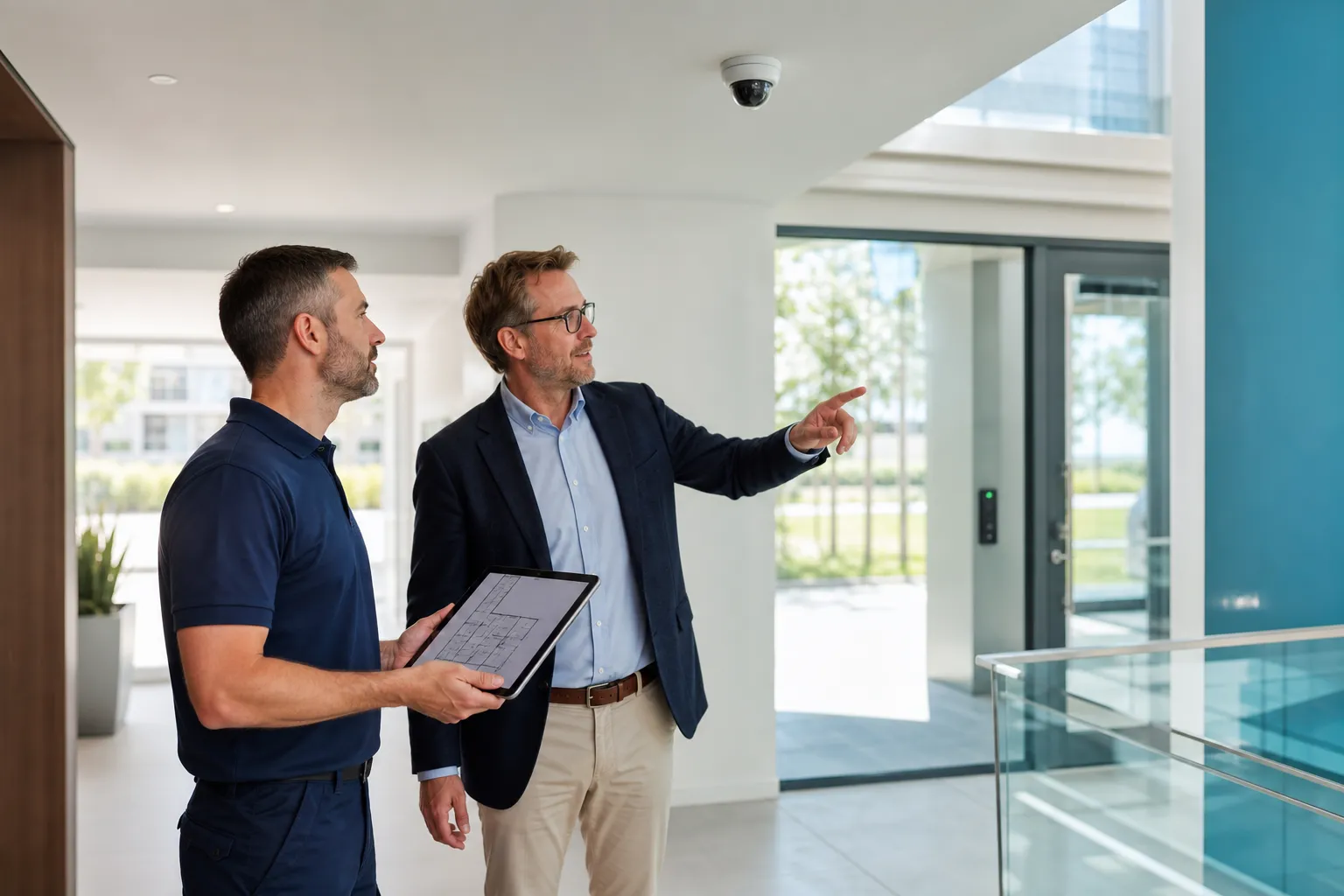
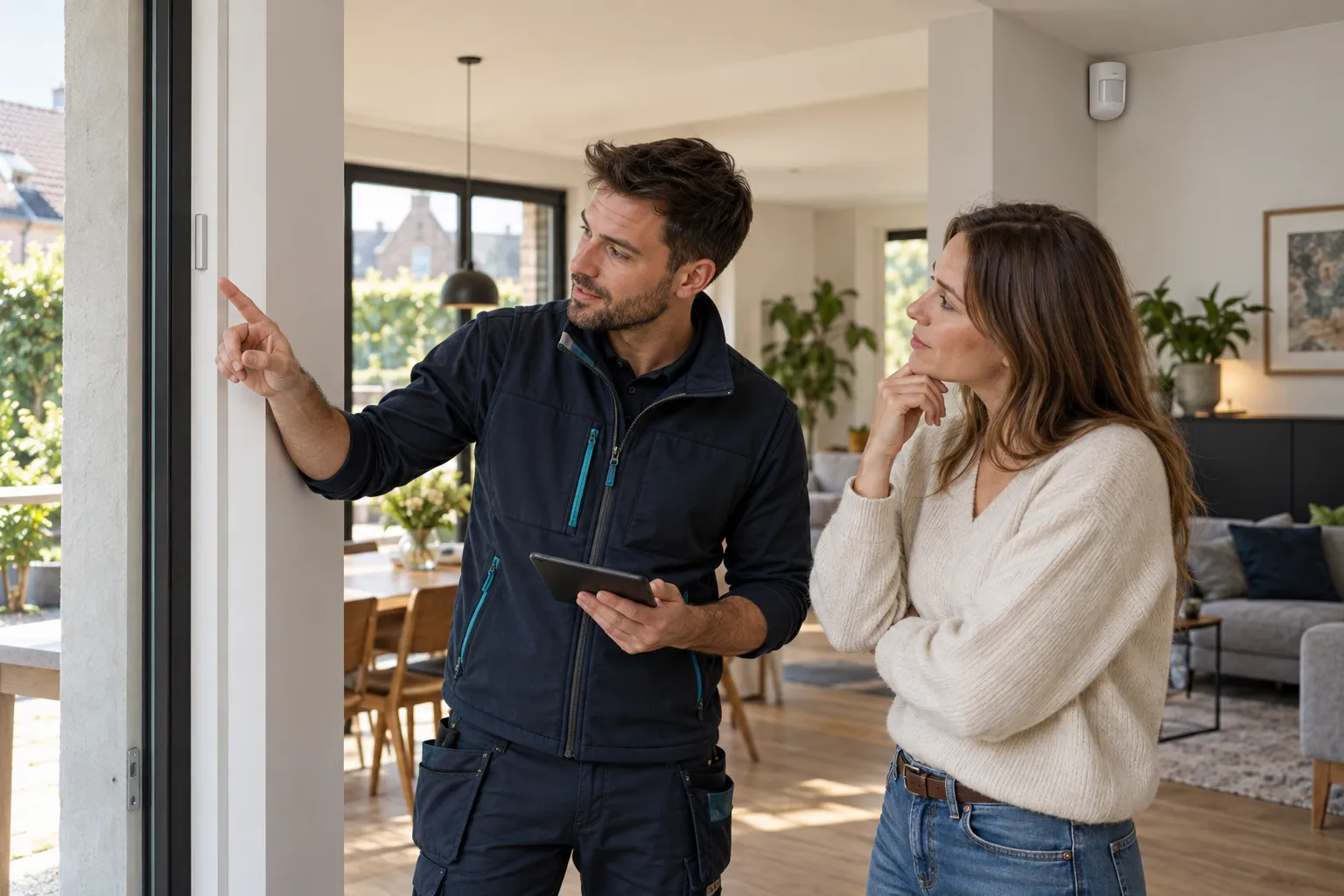
Wired systems often suit new builds or major renovation; professional wireless reduces work in finished buildings; hybrid combines both. Cabling, risk, radio conditions, growth, maintenance and usability decide the right architecture.
Key points
- Wired is stable and avoids batteries in detectors.
- Wireless reduces building work and expands easily.
- Hybrid uses valuable cabling while remaining flexible.
- Design and configuration matter more than labels.
What actually changes?
Wired sensors and controls connect physically to the panel. Wireless devices use supervised radio. Hybrid panels support both.
The panel handles zones, timing, faults and modes. Power loss, communications failure and low batteries also need a planned response.
| Type | Strength | Attention |
|---|---|---|
| Wired | Stable and durable | Cabling work |
| Wireless | Flexible | Batteries and radio |
| Hybrid | Balanced | Consistent management |
When wired makes sense
Wired systems fit open walls, available conduits or tested existing cabling. They are natural in new builds and long-term fixed layouts.
Ask for labelled cable plans and spare capacity. Poor cabling can make future maintenance difficult.
- New build
- Major renovation
- Documented infrastructure
- Long-term fixed devices
When wireless helps
Wireless reduces chasing in homes, shops and offices. Professional devices can supervise presence, battery and radio conditions.
Thick walls, metal and distance require testing. Battery follow-up becomes part of maintenance.
- Finished building
- Light intervention
- Phased expansion
- Disproportionate cable route
Why hybrid is pragmatic
Keep reliable wired contacts and add wireless devices where routes are unavailable. This avoids waste and excessive work.
Document both as one system. Users should not need to know each detector’s transport.
- Reuse after testing
- One set of records
- Reserve panel capacity
- Test every alarm path
Reliability without slogans
Not all wireless systems are weak and not all wired systems are invulnerable. Component quality, positioning, supervision, power and maintenance matter.
A badly placed detector causes problems either way. Pets, heat, glazing and actual activity belong in the survey.
- Device supervision
- Backup power
- Environment-suited detection
- Maintenance
- User training
Daily use and scenarios
Night, away, opening, cleaning and shift scenarios should be simple. Excessive complexity encourages bypassing.
Use individual codes, an alarm procedure and a named owner. Secure mobile access.
| Situation | Question |
|---|---|
| Night | Which zones stay armed? |
| Opening | Who disarms? |
| Cleaning | Which rights and hours? |
| Low battery | Who acts? |
Belgian framework
Alarm companies must be authorised; verify the BeSafe lists. Systems with an external siren or communications module may need registration.
GVISION does not claim 24/7 support. Confirmed hours are Monday to Friday, 8:30 am to 5:00 pm.
- Verify authorisation
- Register where applicable
- Define response roles
- Understand support hours
Decide with six questions
Are walls open, are cables testable, will the site grow, which zones remain active, who maintains the system and how will people use it?
Ask the installer to justify the architecture and separate realistic alternatives.
- Building
- Cabling
- Radio
- Growth
- Users
- Maintenance
FAQ
Does wireless alarm need Wi-Fi?
Not necessarily; professional alarm devices generally use their own radio protocol.
Does wired work during a power cut?
The panel normally has backup power that must be sized and maintained.
Can wired and wireless be mixed?
Yes, with compatible equipment and unified records.
What suits a finished home?
Wireless or hybrid is often practical, depending on available cables and risk.